

7 Insults you will hear in Spain (Part 1)
You're scrolling through Spanish Twitter. Someone cuts off a driver in Madrid. The reply thread explodes with words you've never seen in any textbook. You copy-paste one into Google Translate and get... nothing useful.
That's because real Spanish insults live outside dictionaries. They're passed down in bars, family dinners, and road rage — not classrooms. And if you want to actually understand Spanish speakers (or avoid accidentally insulting someone's grandmother), you need to know what these expressions mean.
Here are 7 Spanish insults you'll hear constantly in Spain, what they actually mean, and — just as importantly — what they do NOT mean.
⚠️ Fair warning: This is a guide to vulgar and offensive Spanish. These expressions are real, common, and important to understand — but use them carefully. Context, tone, and your relationship with the listener matter enormously.
Estoy hasta el coño
Before you read on — can you guess what it means?
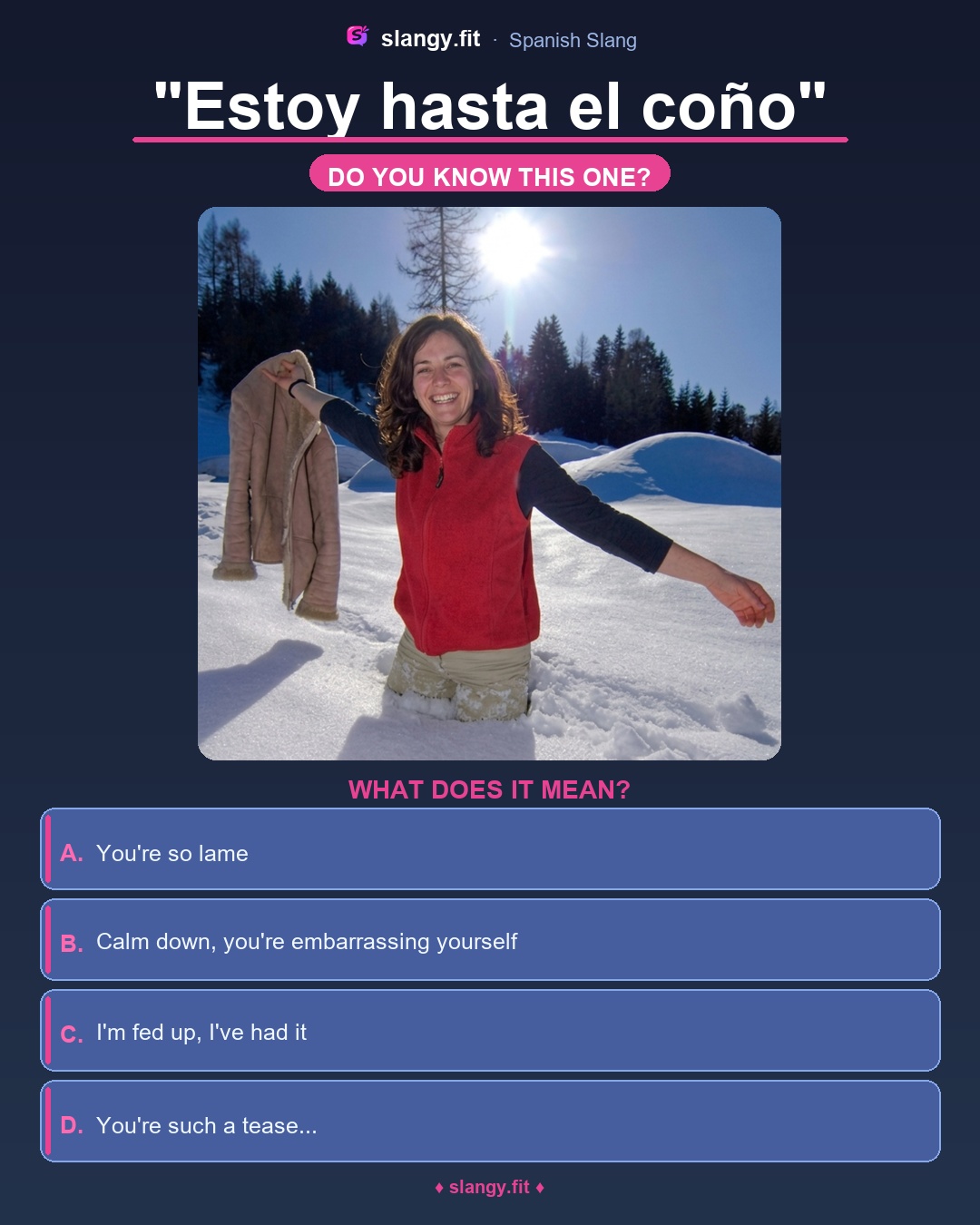
✅ It means…
I'm fed up, I've had it
💡 What it means
Literally it can be translated as "I'm up to the pussy".
In practice it means you're completely fed up, done, and out of patience. It's very strong, vulgar Spain Spanish (peninsular), and can sound aggressive if you say it with the wrong tone. A milder version is "estoy hasta las narices" or "hasta los huevos" (also vulgar).
🗣️ When to use it
After a whole week of delays and excuses at work, you vent to a close friend over coffee.
💬 Example
"Estoy hasta el coño de que cambien los planes a última hora."
Tener la cara más dura que el cemento
Before you read on — can you guess what it means?
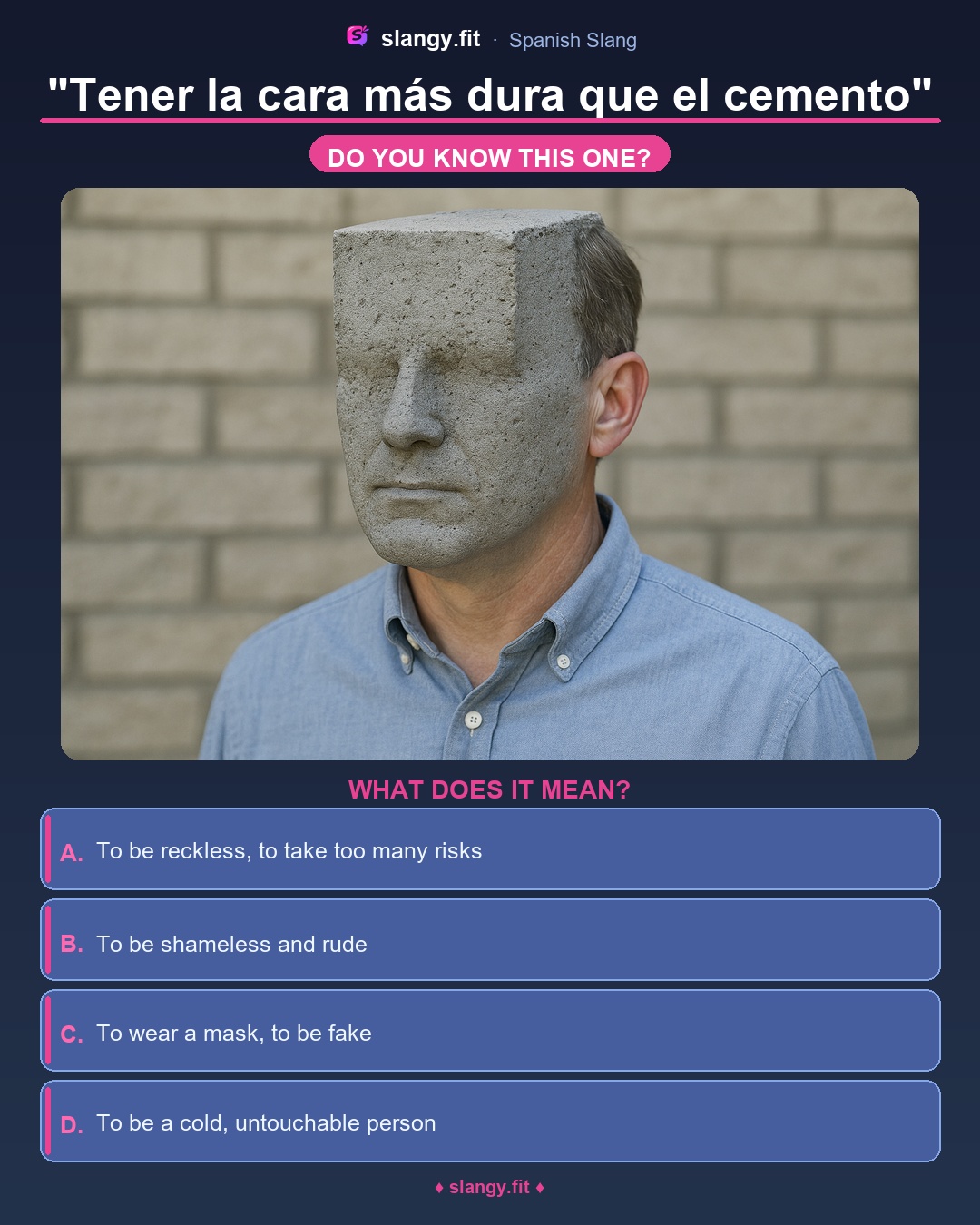
✅ It means…
To be shameless and rude
💡 What it means
Literally, it means "to have a face harder than cement," imagining someone's face as physically tough.
In practice, it describes someone shameless: they ask for favors, lie, or act entitled without embarrassment. It's a very Spanish way to criticize someone's nerve and lack of shame ("cara dura" = cheeky/shameless person). You'll often hear it when someone has the audacity to complain or demand more after doing something wrong.
🗣️ When to use it
A coworker shows up late every day and still asks the boss for a raise, and you comment on it with disbelief.
💬 Example
"Encima de llegar tarde, pide que le paguen más… tiene la cara más dura que el cemento."
Te falta una patata para el kilo
Before you read on — can you guess what it means?
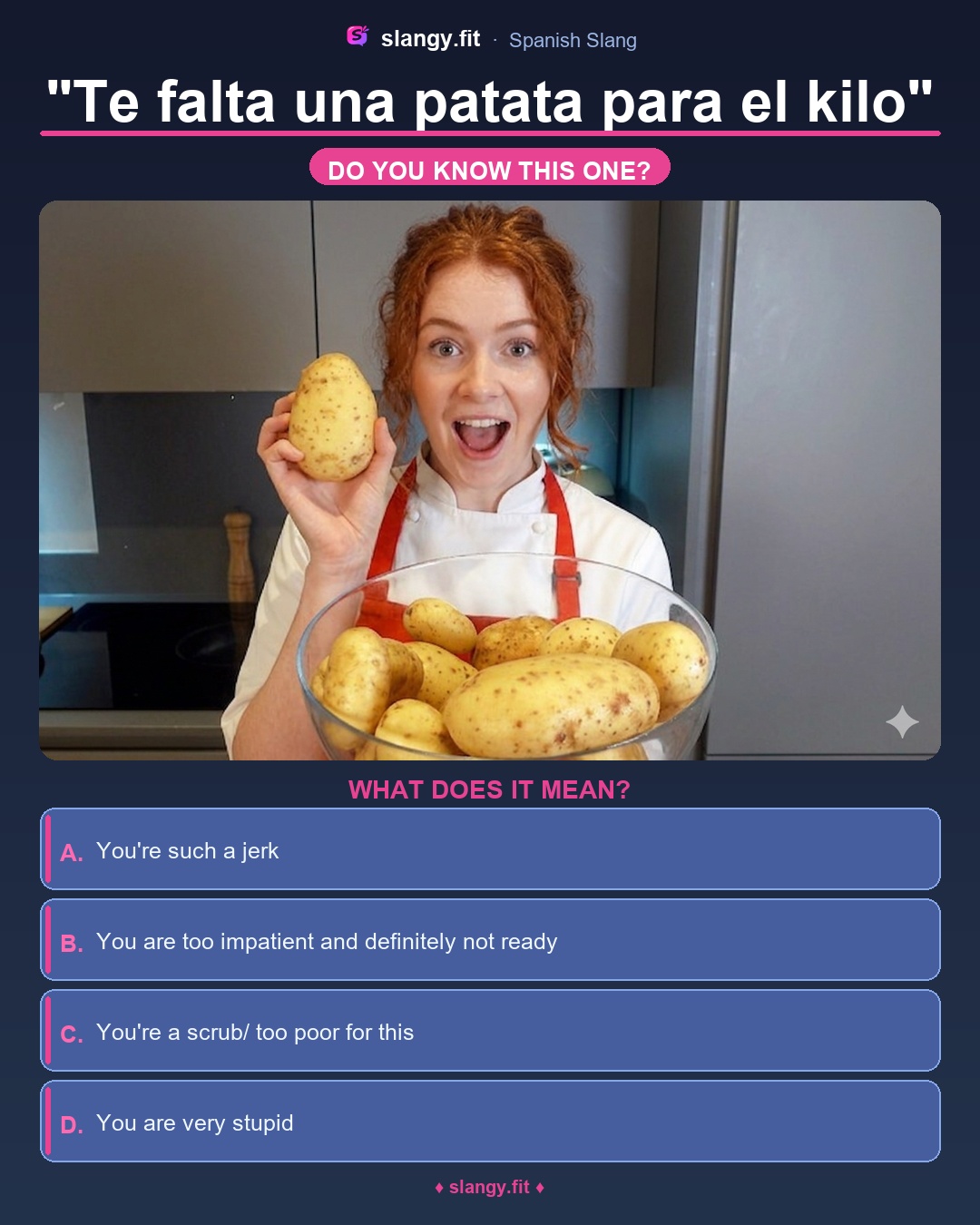
✅ It means…
You are very stupid
💡 What it means
Literally, it means "you're missing one potato to make a kilo," like a bag that's slightly short of the full weight.
In practice, it means someone is not very bright, a bit slow, or "missing a screw." It's usually teasing rather than truly vicious, though it can still offend if you say it seriously. It's part of a family of Spanish jokes like "le falta un tornillo" or "no le llega el agua al tanque," all implying someone is not fully "complete" mentally.
🗣️ When to use it
Your friend forgets their phone inside the fridge for the third time and you laugh and drop this line.
💬 Example
"Tío, ¿otra vez has metido las llaves en el congelador? Te falta una patata para el kilo."
Un tocapelotas
Before you read on — can you guess what it means?
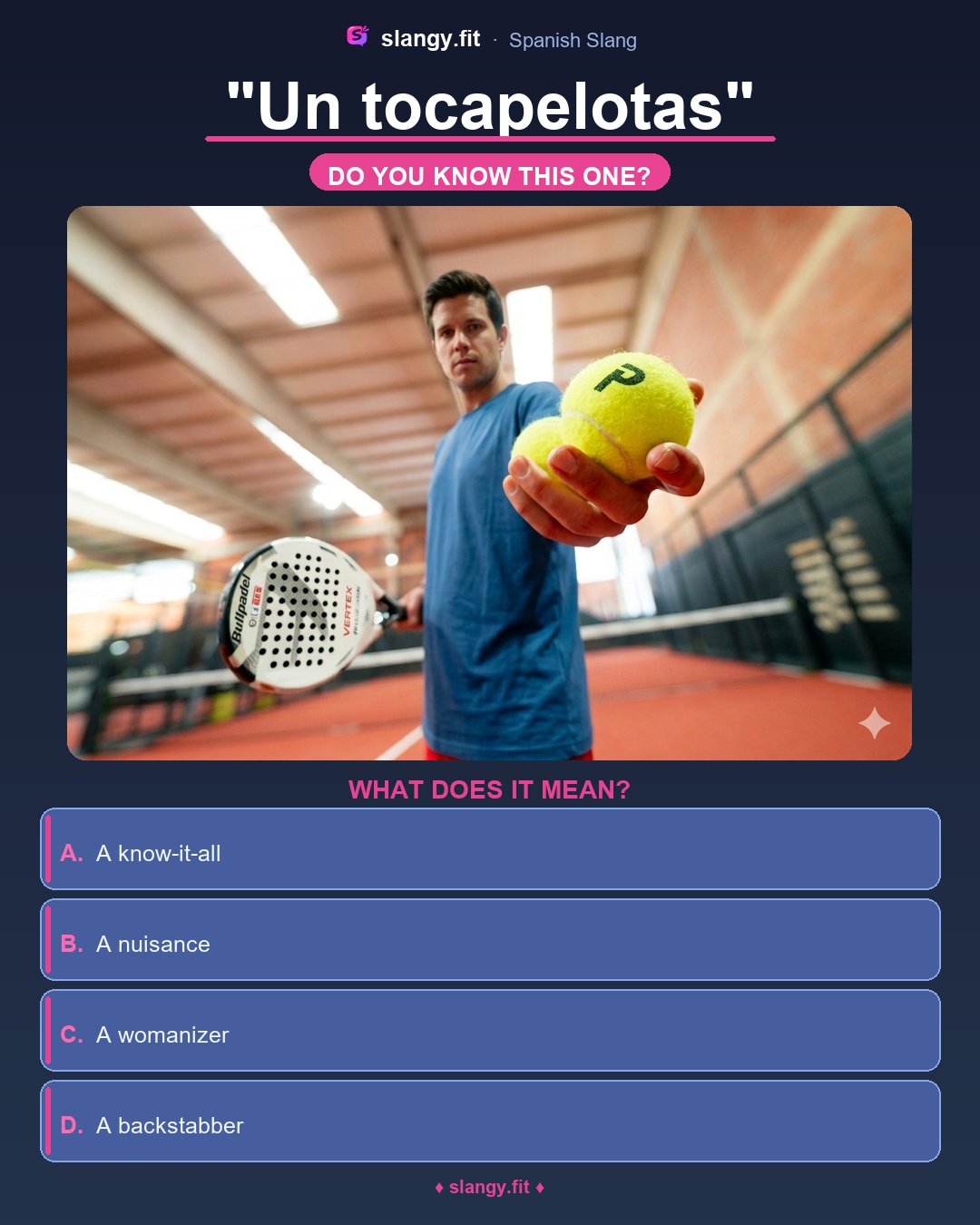
✅ It means…
A nuisance
💡 What it means
Literally, it means "a ball-toucher," with "pelotas" being slang for testicles in Spain.
In practice, it means a nuisance: someone who pesters, nitpicks, annoys, or keeps bothering you. It's vulgar-ish but extremely common in Spain, often used at work or among friends when someone is being unbearable. There are softer variants like "tocanarices" (nose-toucher) that mean the same but with less crudeness.
🗣️ When to use it
A neighbor keeps knocking to complain about tiny noises like a chair scraping, and you vent about them to your partner.
💬 Example
"El vecino es un tocapelotas: se queja por cualquier cosa."
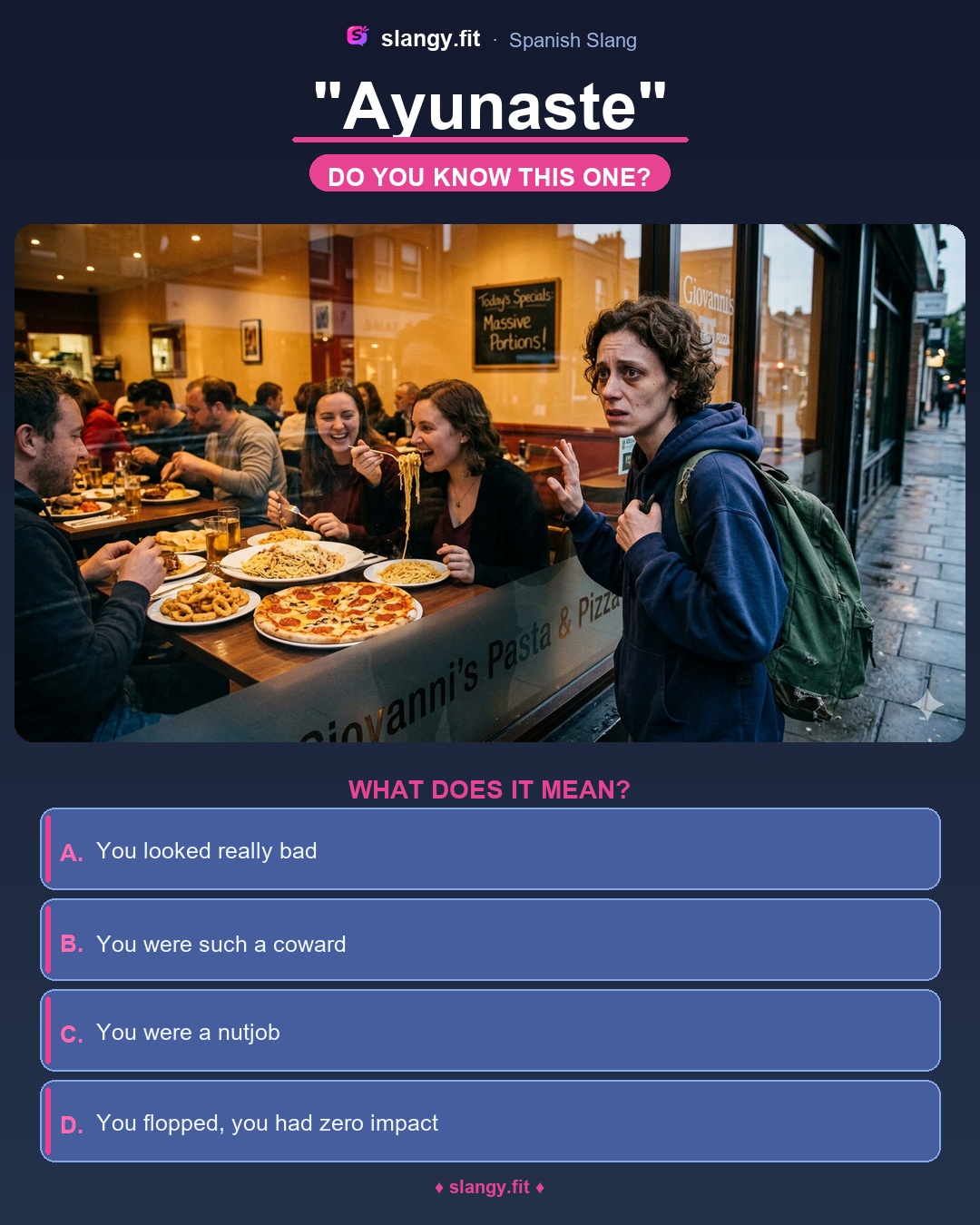
Ayunaste
Before you read on — can you guess what it means?
✅ It means…
You flopped, you had zero impact
💡 What it means
Literally, it means "you fasted," from ayunar (to fast) in the past tense (tú ayunaste).
In practice, it's a teasing way to say someone got nothing out of something: you failed, had zero impact, or your attempt didn't land at all-like "you struck out." It's often used when someone tries to show off, make a point, or "win" an argument and ends up achieving nothing.
In Spanish Gen Z and TikTok slang, "Ayunaste" is the antonym (opposite) of "Devoraste". It is used in social media comments to criticize an outfit, performance, or video in a humorous way, contrasting with high praise like "No dejaste ni las migajas" (You left not even the crumbs).
🗣️ When to use it
Your friend tries to roast you in front of everyone, but the joke is awkward and nobody laughs, so you whisper: "Ayunaste."
💬 Example
"¿Ves? Intentaste dejarme mal y ayunaste, nadie te compró el cuento."
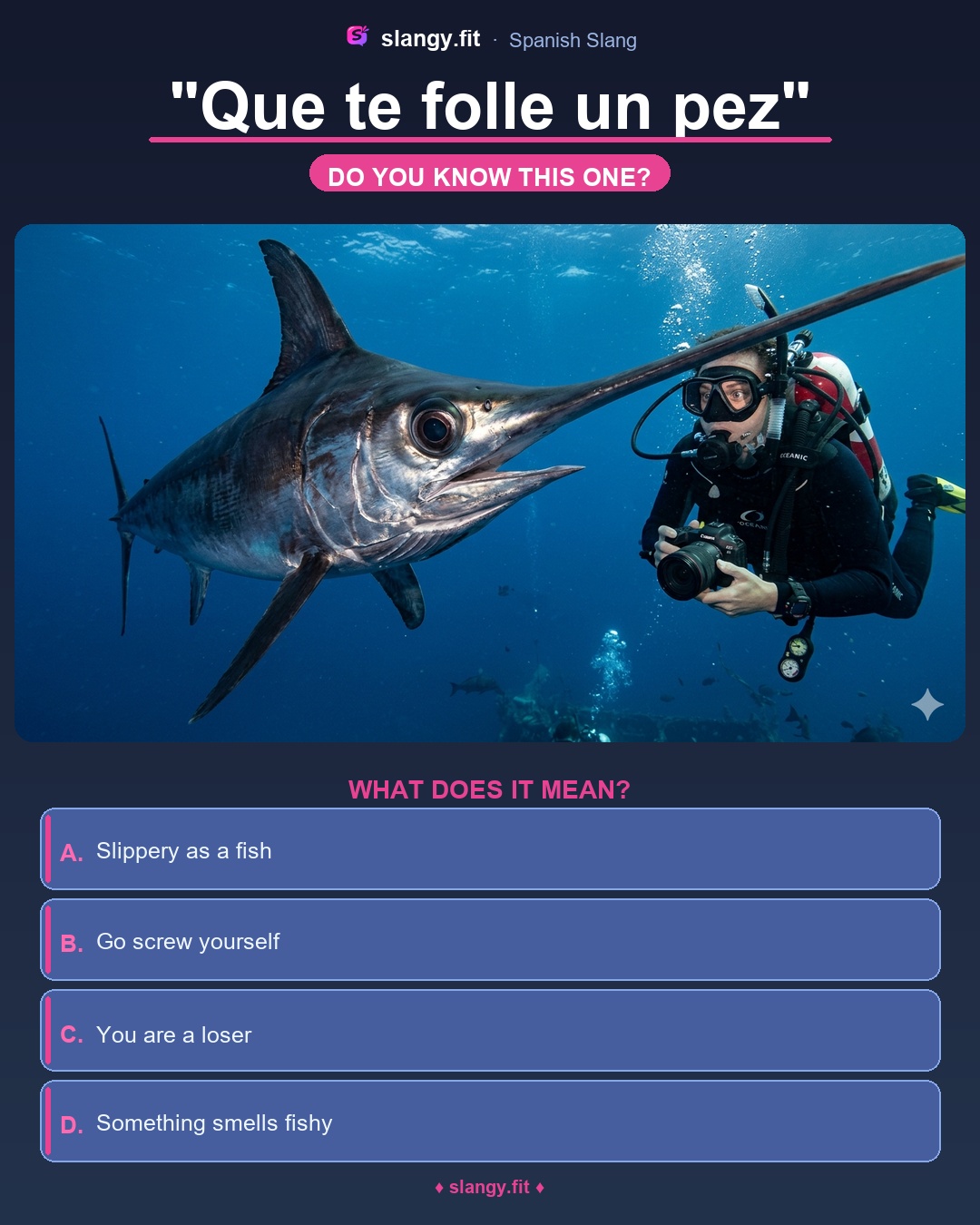
Que te folle un pez
Before you read on — can you guess what it means?
✅ It means…
Go screw yourself
💡 What it means
Literally, it means "may a fish fuck you," with "que" introducing a wish/curse.
In practice, it's a very aggressive way to tell someone to go screw themselves or to get lost, often said in anger. It's deliberately absurd and crude, which makes it sound extra insulting rather than poetic. You'll mostly hear it in Spain-style slang; it's not something you'd say in polite company. Because it's so vulgar, many people use it only jokingly among friends or censor it (e.g., "que te folle un pez…") when half-serious. Sometimes intensified to "que te folle un pez espada" (I hope you get f**cked by a swordfish)
🗣️ When to use it
After someone cuts you off in traffic and then flips you off, you roll down the window and shout this as a furious comeback.
💬 Example
"¡Anda, que te folle un pez, pesado!"
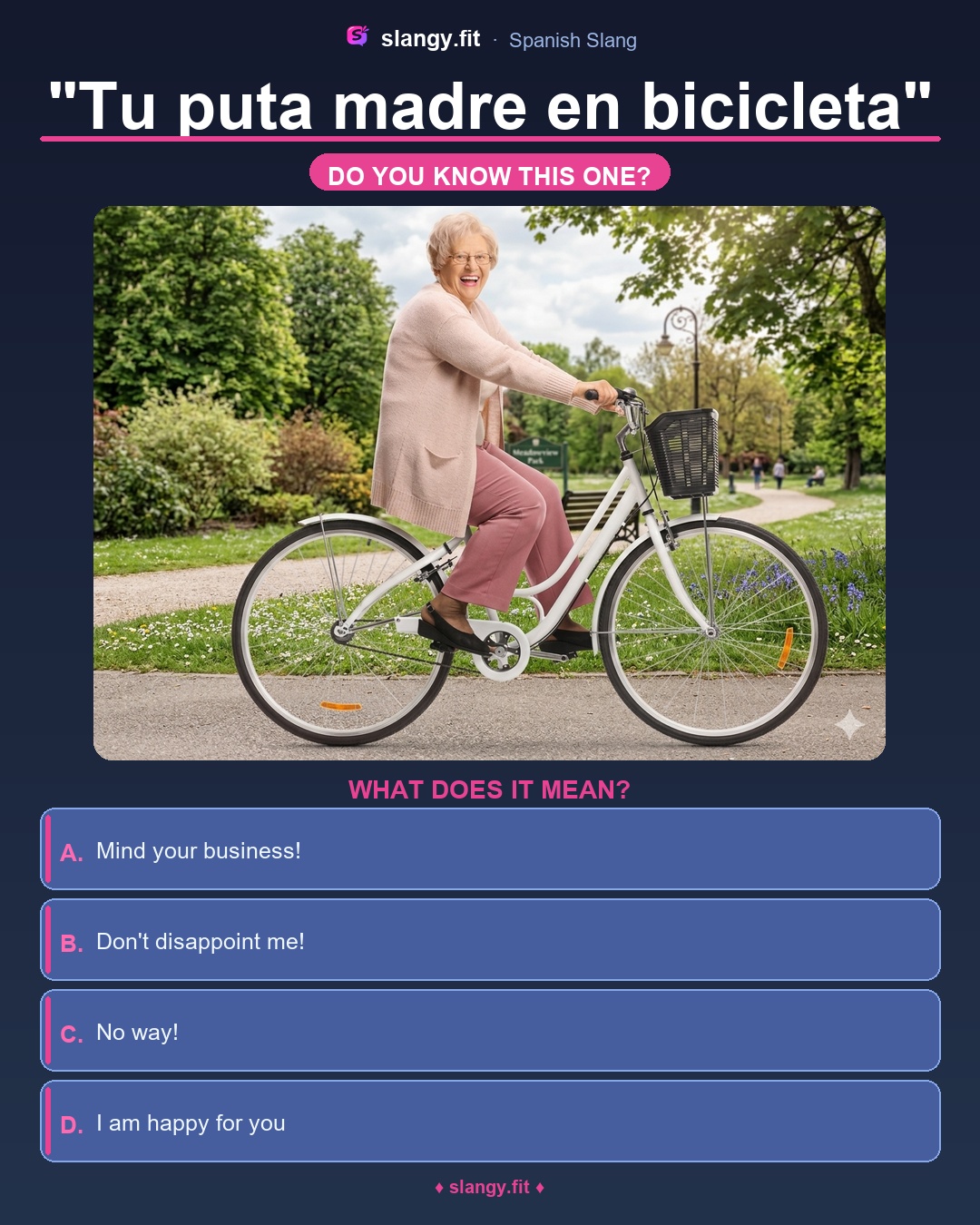
Tu puta madre en bicicleta
Before you read on — can you guess what it means?
✅ It means…
No way!
💡 What it means
Literally, it says "your f***ing mother on a bicycle," which is absurd imagery meant to intensify the insult.
In practice, it's used as a very aggressive outburst-either as a hostile "fuck you / no way" reaction or as an explosive punctuation to anger. It's extremely vulgar and offensive, so it's not something you'd say lightly or to strangers unless you want trouble. It's most associated with Spain (and internet-style Spanish) and often appears as a shock-value phrase.
🗣️ When to use it
Someone tries to scam you and, after you realize it, you explode and spit this out under your breath.
💬 Example
"¿Que te pague yo el arreglo? Tu puta madre en bicicleta."
Want to actually learn these?
Master these expressions with quick interactive exercises. Free to start.